When your air conditioning system keeps your Santa Rosa home cool during our warm summers, it’s doing more than just lowering the temperature—it’s also removing moisture from the air. That moisture has to go somewhere, and that’s where your condensate drain line comes in. This often-overlooked component plays a crucial role in your HVAC system’s health and your home’s protection. When it works properly, you’ll never notice it. When it fails, you might face water damage, system shutdowns, or costly repairs.
Many homeowners here in Sonoma County don’t think about their condensate drain line until something goes wrong. A clogged drain can cause water to back up into your home, damage ceilings and walls, or force your AC system to shut down completely on the hottest day of summer. Understanding how this simple pipe works and how to maintain it can save your family from uncomfortable situations and expensive emergency repairs.
| Topic | Key Points |
|---|---|
| Primary Function | Removes moisture created during cooling process, preventing water accumulation in your system |
| Common Problems | Clogs from algae, mold, dust, and debris that can cause system shutdowns and water damage |
| Warning Signs | Standing water near indoor unit, musty odors, AC shutting off unexpectedly, visible water stains |
| Prevention Methods | Regular flushing with vinegar, professional inspections, drain pan tablets, proper system maintenance |
| Maintenance Frequency | Monthly DIY checks during cooling season, professional cleaning during annual tune-ups |
How Your Condensate Drain Line Works
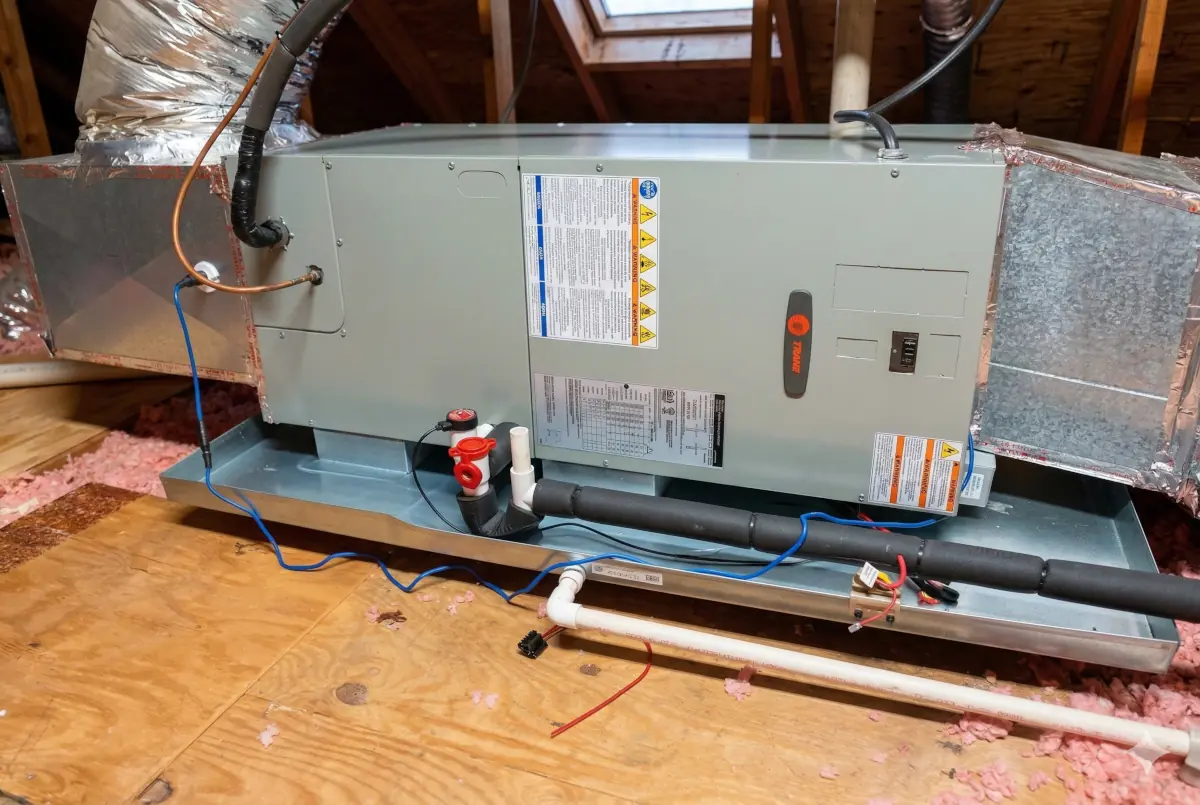
Your air conditioning system creates condensation through a natural process. When warm, humid air from your home passes over the cold evaporator coils inside your AC unit, moisture in the air condenses into water droplets—similar to how a cold glass of water “sweats” on a warm day. These droplets collect in a drain pan beneath the coils, and the condensate drain line carries this water away from your home, typically to the outside or into a plumbing drain.
In our Sonoma County climate, where summer temperatures regularly climb into the 80s and 90s, your AC system runs frequently and produces a substantial amount of condensate. A properly functioning system can produce several gallons of water per day during peak cooling season. This constant moisture flow makes the drain line an ideal environment for algae and mold growth, which is why regular maintenance is so important for local families.
The drain line itself is typically a PVC pipe that runs from your indoor air handler to the outside of your home or connects to your plumbing system. Modern systems include safety features like float switches that shut down your AC if water backs up in the drain pan, protecting your home from water damage but leaving you without cooling until the problem is resolved. Understanding this system helps you appreciate why that simple white pipe deserves your attention during spring maintenance and throughout the cooling season.
Common Problems and Warning Signs
The most frequent issue with condensate drain lines is clogging. Because the line carries moisture in a dark, enclosed space, it creates perfect conditions for biological growth. Algae and mold can form a slimy buildup inside the pipe, while dust, dirt, and debris from your home’s air can accumulate over time. Here in Northern California, our dry summers mean more dust in the air, which can contribute to faster buildup in your drain line even as your system works hard to keep your family comfortable.
Recognizing the warning signs of a condensate drain problem can help you address issues before they become emergencies. Your home and HVAC system will usually give you clear signals when something isn’t right:
- Standing water around your indoor unit: This is the most obvious sign that water isn’t draining properly. Check near your furnace or air handler for water puddles or moisture on the floor.
- Musty or moldy odors: When water backs up or sits stagnant in the drain line, it can create unpleasant smells that circulate through your ductwork and into your living spaces.
- AC system shutting off unexpectedly: If your float switch activates due to water backup, your system will stop cooling to prevent water damage, leaving your home uncomfortable on hot days.
- Water stains on ceilings or walls: If your air handler is in the attic, a severely clogged drain can cause overflow that damages your home’s interior, requiring costly repairs beyond just fixing the HVAC issue.
- Reduced cooling efficiency: Sometimes a partially clogged drain can affect your system’s overall performance, causing it to work harder and less effectively to maintain your desired temperature.
According to the Environmental Protection Agency, excess moisture and standing water in HVAC systems can contribute to mold growth and poor indoor air quality, which can affect your family’s health and comfort. This makes prompt attention to drain line issues not just a matter of system maintenance, but also a consideration for your household’s wellbeing. If you notice any of these warning signs, addressing them quickly can prevent more serious problems and protect both your HVAC investment and your home’s structure.
Maintenance and Prevention Strategies
Keeping your condensate drain line clear doesn’t require advanced technical knowledge, but it does benefit from consistent attention. The good news for local families is that simple preventive maintenance can eliminate most drain line problems before they disrupt your comfort. Professional HVAC technicians recommend a combination of DIY care and professional service to keep your system running smoothly throughout our warm California summers.
Regular maintenance tasks you can perform yourself include several straightforward approaches that work well for Sonoma County homes:
- Monthly vinegar flush: Pour a cup of white vinegar into the drain line access point (usually near the indoor unit) to help prevent algae and mold buildup. The mild acidity breaks down organic matter without damaging your pipes.
- Visual inspections: Check the exterior drain outlet monthly during cooling season to ensure water is flowing freely. You should see water dripping from the pipe when your AC is running on humid days.
- Drain pan tablets: These slow-dissolving tablets sit in your drain pan and release agents that prevent biological growth. Replace them according to manufacturer instructions, typically every few months.
- Keep the area clean: Ensure the space around your indoor unit stays clean and dust-free to reduce the amount of debris that can enter your system and eventually clog the drain line.
While DIY maintenance helps, professional service provides deeper cleaning and inspection that protects your investment long-term. During annual tune-ups, experienced technicians use specialized tools like wet-dry vacuums to thoroughly clear the drain line, inspect the entire drainage system for potential problems, and check that safety devices like float switches are functioning properly. Our experience with local homes shows that this combination of homeowner attention and professional care keeps systems running efficiently and prevents the emergency calls that always seem to come on the hottest days. For your family’s comfort and peace of mind, maintaining your condensate drain line is a small effort that prevents major headaches.
Function
Removes moisture during cooling, preventing water accumulation.
Problems
Algae, mold, and debris clogs leading to water damage.
Maintenance
Regular cleaning with vinegar or bleach, professional checks.
Local Relevance
Dry summers increase usage; dust contributes to clogs.
Protecting Your Home and Investment
Your condensate drain line might be a small component of your overall HVAC system, but its role in protecting your home and maintaining your family’s comfort is significant. Regular attention to this often-forgotten pipe ensures your air conditioning system can do its job effectively, removes moisture that could affect your indoor air quality, and prevents water damage that could cost thousands of dollars to repair. For local families who depend on reliable cooling during our warm summer months, understanding and maintaining your drain line is simply good homeownership.
As your neighbors here in Santa Rosa, we understand how important your home comfort and safety are to your family. If you’ve noticed any warning signs of drain line problems, or if you’d like to establish a preventive maintenance schedule that keeps your system running smoothly, we’re here to help. Contact us for more information about our comprehensive maintenance services and how we can help protect your home’s HVAC investment.
Dale HCS is a family-owned business committed to providing quality HVAC service to Sonoma County families. We combine professional expertise with the personal attention that comes from being part of this community, ensuring your home stays comfortable year-round.
Frequently Asked Questions
What does an AC condensate drain line do?
Your AC condensate drain line removes the moisture that forms when warm air passes over your system’s cold evaporator coils. This moisture collects in a drain pan and flows through the drain line to the outside of your home or into a plumbing drain. Without a working drain line, water can back up into your system and potentially cause damage or shutdowns.
Why do condensate drain lines clog in Santa Rosa and Sonoma County?
In Sonoma County, air conditioners often run heavily during warm, dry summers. As your system removes moisture, the damp interior of the drain line can become a breeding ground for algae and mold. Dust from our dry conditions can also build up inside the pipe. Over time, this combination can create blockages that restrict proper drainage.
How do I know if my condensate drain line is clogged?
Common signs include standing water near your indoor unit, musty odors coming from your vents, or your AC shutting off unexpectedly. You might also notice water stains on ceilings or walls if your system is located in the attic. These warning signs mean water is not draining properly and should be addressed before further damage occurs.
Why does my AC shut off when the drain line is blocked?
Many modern systems have a safety device called a float switch. If water backs up in the drain pan due to a clog, the float switch will automatically shut down your air conditioner to help prevent water damage. While this protects your home, it also means you will not have cooling until the drain line issue is cleared.
How often should I maintain my AC condensate drain line?
During the cooling season, it’s wise to check your drain line monthly to make sure water is flowing freely. A simple vinegar flush can help reduce buildup. In addition, having the drain line professionally cleaned and inspected during your annual AC tune-up provides a more thorough level of protection and helps catch issues early.
Can I clean my condensate drain line myself?
Homeowners can perform basic maintenance, such as pouring a cup of white vinegar into the drain line access point to help control algae and mold growth. You can also visually inspect the outdoor drain outlet for steady drainage. However, a professional technician has specialized tools to fully clear stubborn clogs and inspect safety components.
What happens if I ignore a clogged condensate drain line?
If left untreated, a clogged drain line can cause water to overflow from the drain pan, potentially damaging ceilings, walls, or flooring. It can also trigger system shutdowns during hot weather, leaving your home uncomfortable. Addressing minor clogs early is typically much simpler and less disruptive than dealing with water damage repairs.
How much does it cost to fix a clogged condensate drain line?
The cost can vary depending on the severity of the clog and whether any water damage has occurred. A routine cleaning during a maintenance visit is generally straightforward, while more extensive issues may require additional service. The best way to understand your specific situation is to have a licensed HVAC professional inspect the system and provide an estimate.
Is condensate drain line cleaning included in AC maintenance service?
During a comprehensive AC tune-up, technicians typically inspect and clean the condensate drain line as part of the service. This may include clearing buildup, checking the drain pan, and testing the float switch to ensure it works properly. Regular maintenance helps reduce the likelihood of unexpected clogs during peak cooling season.
Do you provide condensate drain line service in Santa Rosa and Sonoma County?
Yes, condensate drain line inspection and cleaning are part of our HVAC maintenance and repair services for homeowners in Santa Rosa and throughout Sonoma County. Because local summers can put extra demand on air conditioning systems, we focus on preventive care that helps protect your home and keep your system running reliably.