
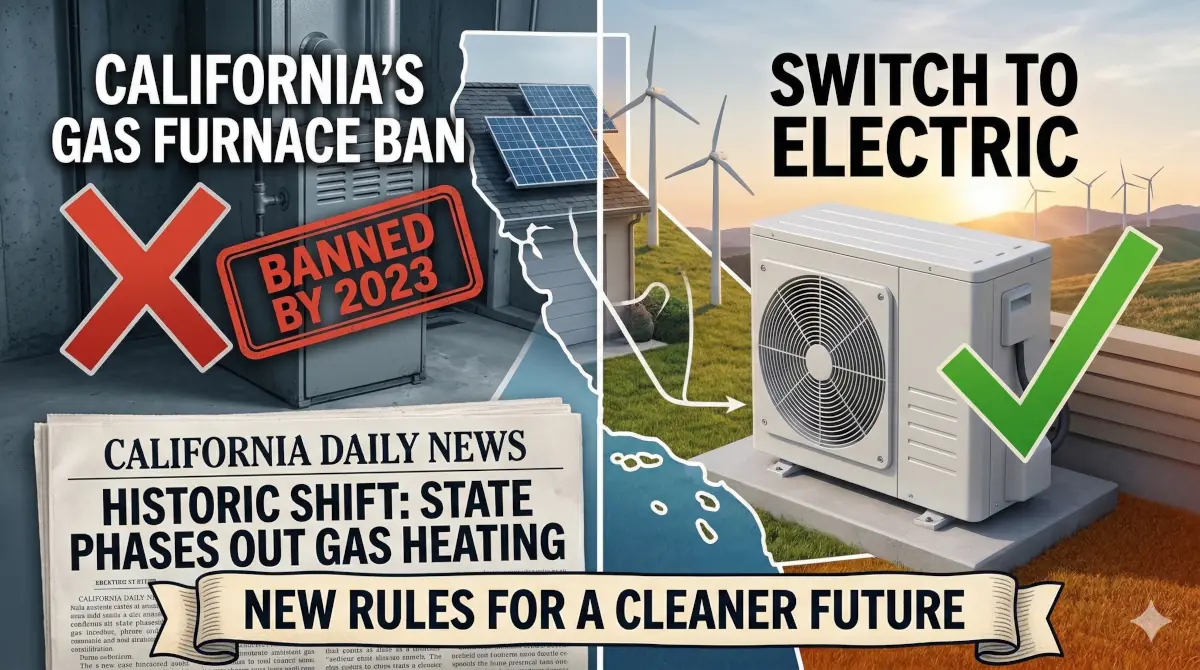
If you’ve heard talk about California “banning” gas furnaces, you’re not alone—many homeowners in Sonoma County are concerned about what this means for their home heating systems. The reality is more nuanced than a simple ban, and understanding the actual regulations can help you make informed decisions about your family’s comfort and your home’s heating future. While California is indeed moving toward cleaner energy standards, the transition affects new construction primarily, with existing homes having more flexibility than many realize.
Here in Sonoma County, our mild climate and progressive energy goals make us an ideal community for understanding and adapting to these changes. Whether you’re planning a new home, considering a system replacement, or simply want to understand how these regulations might eventually affect you, having accurate information is essential for protecting your investment and maintaining your family’s comfort.
| Topic | Key Points |
|---|---|
| Current Regulations | 2023 Energy Code primarily affects new construction; existing homes can still replace gas furnaces with updated gas systems |
| Timeline Impact | New residential construction standards began January 2023; future regulations may expand over coming years |
| Alternative Systems | Heat pumps, hybrid systems, and high-efficiency electric options provide effective heating for our climate |
| Financial Incentives | State and utility rebates available for transitioning to electric heating systems |
| Local Advantage | Sonoma County’s mild winters make modern heat pumps highly efficient and cost-effective year-round |
What the California Energy Code Actually Says
The term “gas furnace ban” has created considerable confusion among homeowners, but understanding the actual regulations reveals a more gradual transition. California’s 2023 Energy Code, which took effect January 1, 2023, establishes new energy efficiency standards primarily targeting new residential construction. The code strongly encourages electric heat pump systems over traditional gas furnaces for newly built homes, but it doesn’t prohibit gas furnaces outright or require existing homeowners to replace functioning systems.
For existing homes here in Sonoma County, you can still replace a failing gas furnace with another gas furnace through 2029, though the new system must meet current efficiency standards. The regulations focus on reducing greenhouse gas emissions from buildings over time, recognizing that an immediate wholesale transition would be impractical and costly for homeowners. California’s approach balances environmental goals with the reality that heating systems represent significant investments that families need time to plan for and accommodate within their budgets. In 2030, there will be a ban on selling new gas-powered furnaces and water heaters
The broader context involves California’s commitment to carbon neutrality by 2045, with buildings accounting for approximately 25% of the state’s greenhouse gas emissions. While future regulations may become more restrictive, the current standards give homeowners flexibility while incentivizing cleaner heating technologies. This measured approach allows families to make informed decisions based on their specific circumstances, system age, and financial considerations rather than facing immediate, mandated changes.
Heat Pumps: The Primary Alternative for Northern California Homes
As California transitions toward cleaner energy standards, heat pumps have emerged as the leading alternative to traditional gas furnaces, and for good reason. Modern heat pump technology has advanced significantly, making these systems highly effective even in colder climates—and exceptionally efficient in Sonoma County’s mild winters. Unlike furnaces that generate heat by burning fuel, heat pumps transfer heat from outside air into your home, using electricity to move existing heat rather than create it from scratch.
This fundamental difference in operation makes heat pumps remarkably efficient, often delivering three to four times more heating energy than the electrical energy they consume. For local families, this efficiency translates to lower operating costs despite electricity rates, particularly when combined with California’s increasingly renewable energy grid. Our typical winter temperatures rarely drop low enough to challenge modern heat pump performance, making our region ideal for this technology.
Understanding your heat pump options helps you make informed decisions about your home’s heating future:
- Air-source heat pumps replace traditional central heating systems and provide both heating and cooling through existing ductwork, offering year-round climate control with a single system.
- Ductless mini-split systems work well for homes without existing ductwork or for additions and specific zones, providing flexible installation options and excellent efficiency.
- Hybrid systems combine a heat pump with a backup gas furnace, automatically switching to the most efficient heating source based on outdoor temperatures and energy costs.
- High-efficiency electric heat pumps now operate effectively in temperatures well below what we typically experience in Northern California, with some models functioning efficiently even below 0°F.
The versatility of heat pump systems extends beyond just replacing your gas furnace. Many homeowners appreciate that heat pumps provide both heating and cooling, potentially replacing both a furnace and air conditioner with a single, efficient system. This dual functionality can offset the initial investment cost while simplifying maintenance and reducing the equipment footprint in your home. Additionally, heat pumps provide consistent, comfortable heating without the temperature fluctuations sometimes experienced with forced-air gas systems, and they operate more quietly than traditional furnaces.
Planning Your Home’s Heating Future
Whether you’re building new, facing a system replacement, or planning ahead, understanding your timeline and options helps you make decisions that serve your family’s needs and budget. If your current gas furnace is functioning well, there’s no immediate requirement to replace it. However, if your system is approaching 15-20 years old or requiring frequent repairs, this transition period presents an opportunity to evaluate alternatives that may better serve your long-term interests.
For homeowners considering their options, several factors deserve careful consideration:
- System age and condition matter significantly—a well-maintained gas furnace with years of life remaining doesn’t need premature replacement, while an aging system nearing failure presents the perfect opportunity to explore heat pump technology.
- Home electrical capacity sometimes requires upgrading to support heat pump systems, though many modern heat pumps work with existing electrical service, and upgrades may qualify for additional incentives.
- Existing ductwork condition affects installation costs and system efficiency; our technicians can assess whether your ducts need sealing, insulation, or modification for optimal heat pump performance.
- Financial incentives and rebates change periodically, with federal tax credits, state programs, and PG&E rebates potentially covering significant portions of heat pump installation costs.
- Long-term energy costs should factor into your decision, as heat pump operating expenses often prove lower than gas furnace costs over the system’s lifetime, despite higher upfront investment.
The financial aspect of transitioning to heat pump technology concerns many homeowners, but several programs help offset costs. Federal tax credits currently cover up to 30% of qualifying heat pump installations, while California state programs and utility incentives provide additional support. These incentives recognize that upfront costs shouldn’t prevent families from accessing efficient, clean heating technology. As your neighbors and local HVAC experts, we stay current on available programs and can help you navigate the incentive landscape to maximize your investment value.
Looking ahead, California will likely introduce additional regulations encouraging electrification, though any changes will consider implementation timelines and homeowner circumstances. Staying informed about these developments helps you plan proactively rather than reactively. If you’re installing a new gas furnace today, you’re investing in a system that should serve your family well for 15-20 years, and no current regulations require removing functioning equipment. However, understanding that future replacements may face different requirements helps you make informed decisions aligned with both immediate needs and long-term plans. For more information about heating system options suitable for your home, professional assessment considers your specific circumstances, budget, and goals.
Current Regulations
2023 Energy Code encourages electric heat pumps for new constructions, no immediate ban on existing gas furnaces.
Implementation Timeline
Standards took effect since January 1, 2023, focusing initially on new residential buildings.
Affected Systems
Impacts new installations; existing systems can still be replaced with updates.
Alternative Heating
Heat pumps and hybrid systems offer energy-efficient alternatives to traditional gas furnaces.
Making Informed Decisions for Your Home
California’s energy standards reflect a gradual transition toward cleaner heating technologies, not an immediate disruption to your home comfort. Understanding the actual regulations—rather than relying on incomplete information—empowers you to make decisions that serve your family’s needs while considering environmental responsibility and long-term costs. Whether you’re maintaining your current gas furnace, planning a replacement, or exploring heat pump technology, having accurate information ensures your choices align with your circumstances and values.
As a family-owned business serving Sonoma County, we’re here to help you navigate these changes with expertise and transparency. Our experience with local homes gives us unique insight into which systems perform best in our climate and how to maximize efficiency while maintaining reliability. If you have questions about how California’s energy standards affect your home or want to explore your heating options, we invite you to contact our team for a personalized assessment. We’ll provide honest guidance based on your specific situation, helping you make informed decisions that protect your investment and your family’s comfort for years to come.
Frequently Asked Questions
Is California banning gas furnaces in existing homes?
No. California’s 2023 Energy Code primarily affects new residential construction. Homeowners in existing homes can still replace a failing gas furnace with a new gas furnace, as long as it meets current efficiency standards. There is no requirement to remove a working gas furnace. The transition toward electric systems is gradual and mainly focused on new builds.
How does the 2023 Energy Code affect new construction in Sonoma County?
For new homes built starting January 1, 2023, the Energy Code strongly encourages electric heat pump systems instead of traditional gas furnaces. While it does not completely prohibit gas equipment, the standards are designed to promote cleaner, more energy-efficient electric options. Builders and homeowners planning new construction should review heating choices early in the design process.
Can I still replace my old gas furnace with another gas furnace?
Yes, in most cases you can replace an existing gas furnace with a new, high-efficiency gas model. The replacement system must meet current energy efficiency requirements, but there is no statewide mandate requiring you to switch to a heat pump if your home already uses gas heating. It’s important to review your options based on your home and long-term plans.
What are the main alternatives to a gas furnace?
The most common alternative is an electric heat pump. Options include air-source heat pumps that use existing ductwork, ductless mini-split systems for homes without ducts, and hybrid systems that combine a heat pump with a gas backup. Modern heat pumps provide both heating and cooling, making them a versatile option for many Sonoma County homes.
Are heat pumps effective in Sonoma County’s climate?
Yes. Sonoma County’s mild winters make it well-suited for modern heat pump systems. Heat pumps work by transferring heat rather than generating it, which makes them highly efficient in moderate climates. Our typical winter temperatures rarely challenge today’s heat pump technology, allowing homeowners to maintain comfortable indoor temperatures throughout the season.
How do I know if it’s time to replace my furnace?
If your furnace is 15–20 years old, needs frequent repairs, or struggles to keep your home comfortable, it may be time to consider replacement. Rising energy bills and uneven heating can also signal declining efficiency. A professional evaluation can help you understand whether repair, replacement, or upgrading to a heat pump makes the most sense.
Are there rebates or tax credits for installing a heat pump?
Yes. Federal tax credits may cover up to 30% of qualifying heat pump installation costs. In addition, California programs and PG&E incentives may offer rebates that help reduce upfront expenses. Available programs can change, so it’s important to review current incentives when planning your project to understand potential savings.
How much does it cost to switch from a gas furnace to a heat pump?
Costs vary depending on your home’s size, existing ductwork, and electrical capacity. Some homes may require electrical upgrades, while others can use existing systems. Although heat pumps often involve a higher upfront investment than a gas furnace, incentives and long-term energy savings can help offset the difference. A home-specific estimate provides the most accurate guidance.
Will I need to upgrade my electrical system to install a heat pump?
Not always. Many modern heat pumps can operate with existing electrical service, but some homes may need panel upgrades or circuit additions. An HVAC assessment can determine whether your current electrical capacity is sufficient and explain any recommended improvements before installation begins.
Do you provide heating system evaluations in Sonoma County?
Yes. We provide heating system assessments for homeowners throughout Sonoma County. Whether you’re maintaining a gas furnace, planning a replacement, or exploring heat pump options, a professional evaluation helps you understand system condition, efficiency, and available alternatives based on local climate and current regulations.