
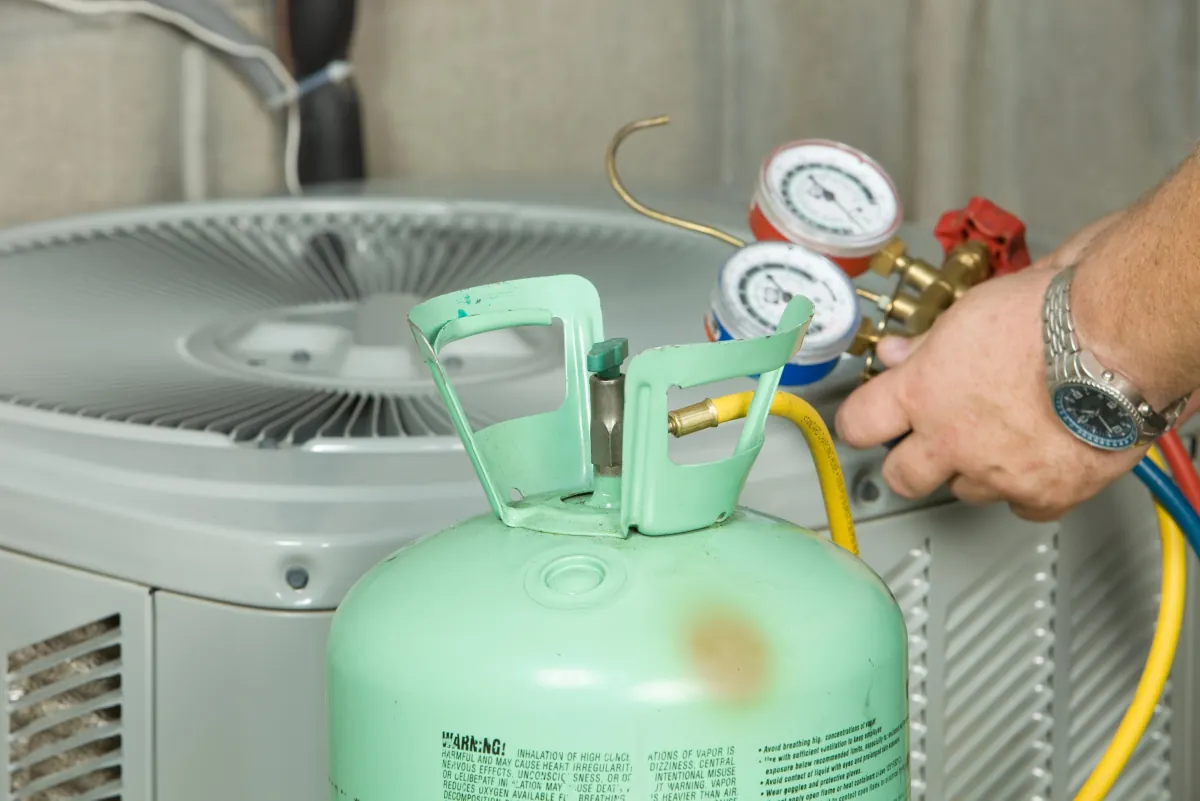
When your air conditioning system isn’t cooling your Sonoma County home as it should, a refrigerant leak might be the culprit. As temperatures rise during our warm summers, discovering that your A/C isn’t performing properly can quickly turn from a minor inconvenience into a major concern for your family’s comfort. While the internet is full of DIY solutions for home repairs, fixing an A/C refrigerant leak is a completely different matter—one that requires professional expertise, specialized equipment, and legal compliance.
Understanding why refrigerant leaks demand professional air conditioning repair helps protect both your family’s safety and your investment in your home’s comfort. The refrigerant in your HVAC system isn’t simply a fluid that can be topped off like windshield washer fluid—it’s a carefully balanced component that requires specialized handling and certification to service properly.
| Topic | Key Points |
|---|---|
| Legal Requirements | EPA certification required by law to handle refrigerants; hefty fines for violations |
| Safety Concerns | Refrigerants can cause frostbite, respiratory issues, and environmental damage |
| Proper Diagnosis | Specialized equipment needed to locate leaks and measure system pressure accurately |
| System Balance | Precise refrigerant charge essential for efficiency and preventing compressor damage |
| Professional Solution | Licensed technicians repair leaks, evacuate system, and recharge to manufacturer specifications |
Why Refrigerant Leaks Require Professional Expertise
The refrigerant circulating through your HVAC system operates under extreme pressures and temperatures, making it fundamentally different from other household fluids you might handle. This substance transforms from liquid to gas and back again as it moves through your system, absorbing heat from inside your home and releasing it outside. When a leak develops, you’re not just losing cooling capacity—you’re dealing with a regulated substance that requires special handling.
Federal law prohibits anyone without EPA Section 608 certification from purchasing, handling, or adding refrigerants to air conditioning systems. This isn’t simply a technical requirement—it’s environmental protection legislation designed to prevent the release of substances that deplete the ozone layer and contribute to climate change. The penalties for violating these regulations can reach thousands of dollars for homeowners who attempt DIY repairs. According to the Environmental Protection Agency, these regulations apply to all air conditioning systems, from window units to central HVAC systems, with no exceptions for homeowners working on their own equipment.
Beyond the legal implications, attempting to fix a refrigerant leak yourself puts your family at risk. Direct contact with refrigerant can cause severe frostbite, while inhaling the vapors in enclosed spaces can displace oxygen and cause respiratory distress. Our experience with local homes has shown us countless situations where well-meaning homeowners created larger problems—and bigger repair bills—by attempting DIY refrigerant repairs. The specialized knowledge and equipment that professional technicians bring to your home ensure that repairs are completed safely, legally, and effectively.
The Complex Process of Properly Repairing Refrigerant Leaks
Identifying the source of a refrigerant leak requires far more than visual inspection. Professional HVAC technicians use electronic leak detectors, ultraviolet dye systems, and pressure testing equipment to pinpoint even the smallest leaks in your system. These tools can detect leaks that release less than half an ounce of refrigerant per year—leaks that are completely invisible to the untrained eye but significant enough to gradually degrade your system’s performance.
Once a leak is located, the repair process involves multiple steps that require specialized training and equipment. Simply patching the leak or adding more refrigerant won’t restore your system to proper working condition. Here in Sonoma County, where our cooling systems work hard during summer months, proper repair techniques are essential for long-term reliability and efficiency.
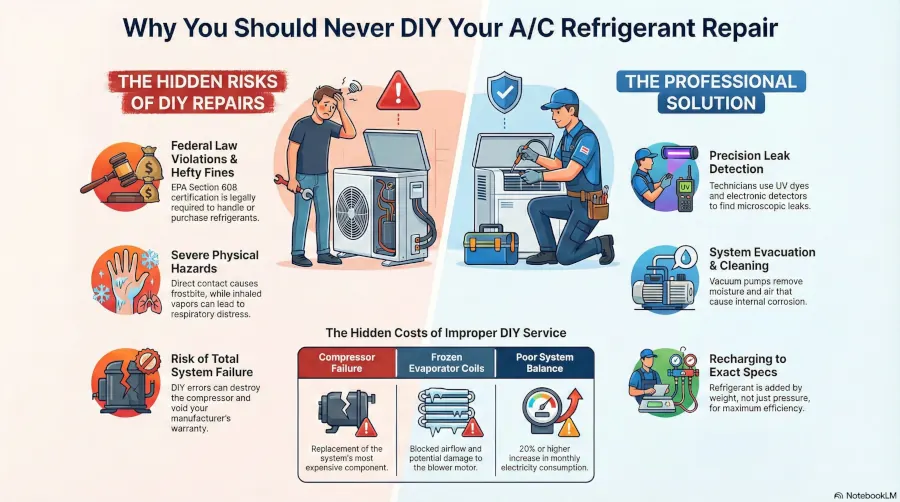
Professional refrigerant leak repair includes several critical steps:
- Complete system evacuation: All remaining refrigerant must be properly recovered using specialized equipment before repairs begin, preventing environmental release and ensuring technician safety during the repair process.
- Leak repair or component replacement: Depending on the location and severity, leaks may be brazed (a high-temperature welding process), or the entire component may need replacement to ensure a permanent fix.
- System pressure testing: After repairs, technicians pressurize the system with nitrogen to verify the leak is completely sealed and no additional leaks exist elsewhere in the system.
- Vacuum pump evacuation: The system must be evacuated to remove all air and moisture, which would otherwise contaminate the refrigerant and damage internal components.
- Precise refrigerant charging: New refrigerant is added to manufacturer specifications by weight, not pressure alone, ensuring optimal system performance and efficiency.
- System testing and verification: Final checks confirm proper temperatures, pressures, and overall system performance to ensure your comfort and efficiency.
This comprehensive process explains why professional cooling services deliver results that DIY attempts cannot match. Each step requires specific tools, training, and expertise that takes years to develop. Skipping any of these steps or performing them incorrectly can result in poor cooling performance, dramatically increased energy bills, or even complete system failure requiring thousands of dollars in replacement costs.
Protecting Your Investment and Your Family’s Comfort
Understanding the complexity of refrigerant systems helps explain why professional maintenance is such a valuable investment in your home’s comfort. Regular HVAC maintenance allows technicians to identify potential leak points before they become problems, checking connections, monitoring refrigerant levels, and inspecting components that commonly develop leaks over time. This preventive approach saves families from the discomfort and expense of emergency repairs during the hottest days of summer.
The cost difference between DIY attempts and professional service often surprises homeowners. While you might save money on labor initially, improper repairs typically lead to much larger expenses down the road. Common consequences of DIY refrigerant work include:
- Compressor failure: Incorrect refrigerant levels cause the compressor to work harder, generating excessive heat and dramatically shortening its lifespan—the compressor is the most expensive component in your system.
- Frozen evaporator coils: Low refrigerant levels cause coils to freeze, blocking airflow and potentially damaging the blower motor and other components throughout your system.
- Increased energy consumption: Systems with refrigerant leaks can use 20% or more extra electricity while providing less cooling, directly impacting your monthly utility bills.
- Secondary system damage: Moisture and contaminants introduced during improper service can circulate throughout the entire system, causing corrosion and component failure.
- Voided warranties: Most HVAC equipment warranties explicitly require professional service, and manufacturers can deny coverage if they discover unauthorized repairs.
For local families, the peace of mind that comes with professional service extends beyond just proper repairs. Licensed technicians carry insurance that protects your home and family in the unlikely event something goes wrong during service. They stay current with changing regulations about refrigerant types and handling procedures, ensuring your system remains compliant with evolving environmental standards. As our community continues to prioritize indoor air quality and energy efficiency, having a trusted professional relationship for your HVAC needs becomes increasingly valuable.
The reality is that modern air conditioning systems are sophisticated pieces of HVAC equipment designed and manufactured to exact specifications. Every component works together in precise balance, and the refrigerant circuit is the heart of this system. When that balance is disrupted by a leak, restoration requires more than just adding more refrigerant—it demands the expertise, equipment, and legal authorization that only licensed professionals possess. Attempting DIY repairs doesn’t just risk your immediate comfort; it can compromise your entire system’s longevity and your family’s safety.
Legal Compliance
EPA certification needed to handle refrigerants, with fines for unauthorized handling.
Safety Risks
Refrigerants pose hazards like frostbite and respiratory issues; requires safe handling.
Professional Repair
Requires trained technicians with specialized equipment for accurate diagnosis and repair.
Trust Your Home’s Comfort to Experienced Professionals
When you suspect a refrigerant leak in your air conditioning system, the smart choice is always to contact qualified professionals who have the training, certification, and equipment to diagnose and repair the issue correctly. The investment in proper service protects your family’s comfort, your home’s value, and your HVAC system’s longevity while ensuring compliance with environmental regulations that protect our community and planet.
As your neighbors here in Sonoma County, we understand how important reliable cooling is for your family’s comfort during our warm summer months. If you’re experiencing reduced cooling performance, ice buildup on your outdoor unit, hissing sounds from your system, or higher-than-normal energy bills, these may be signs of a refrigerant leak that needs professional attention. Contact our experienced team to schedule an inspection and ensure your system is operating safely and efficiently. Our family-owned business has built its reputation on providing honest, reliable service to local homeowners who deserve quality workmanship and peace of mind.
Frequently Asked Questions
Can I legally fix an A/C refrigerant leak myself?
No. Federal law requires EPA Section 608 certification to purchase, handle, or add refrigerant to an air conditioning system. This applies even if you are working on your own home. Attempting a DIY refrigerant repair can result in significant fines and legal issues, in addition to safety risks. Refrigerant is a regulated substance and must be handled by licensed professionals.
What are common signs of a refrigerant leak in my air conditioner?
Common warning signs include reduced cooling, ice buildup on the indoor or outdoor coils, hissing or bubbling sounds, and higher-than-normal energy bills. Some homeowners also notice that their system runs longer without reaching the desired temperature. These symptoms usually indicate a problem that needs professional diagnosis, not a simple adjustment.
Is adding more refrigerant enough to fix the problem?
No. Adding refrigerant without repairing the leak only provides temporary relief and can cause further damage. A proper repair requires locating and fixing the leak, evacuating the system, and recharging it to manufacturer specifications. Skipping these steps can lead to compressor damage, poor efficiency, and repeat breakdowns.
Why is refrigerant leak repair considered dangerous?
Refrigerant operates under high pressure and extreme temperatures. Direct contact can cause frostbite, and inhaling vapors in enclosed spaces can displace oxygen and cause breathing issues. Improper handling can also release refrigerant into the environment. Professional technicians use specialized equipment and follow safety procedures to minimize these risks.
What does a professional refrigerant leak repair involve?
A professional repair includes recovering existing refrigerant, locating the leak with specialized tools, repairing or replacing the affected component, pressure testing the system, evacuating air and moisture, and recharging refrigerant by weight. Final testing confirms the system is operating correctly. Each step is critical for safety, efficiency, and long-term reliability.
How much does professional refrigerant leak repair usually cost?
The cost varies depending on the location and severity of the leak, the parts involved, and the amount of refrigerant required. Minor repairs may be relatively straightforward, while major component replacements can cost more. A professional inspection is the only way to get an accurate estimate for your specific system.
Can refrigerant leaks damage my air conditioning system?
Yes. Low refrigerant levels can cause the compressor to overheat, lead to frozen evaporator coils, and increase energy usage. Over time, these issues can result in expensive component failures or even the need for full system replacement. Prompt professional repair helps protect your investment.
Does regular HVAC maintenance help prevent refrigerant leaks?
Regular maintenance can help reduce the risk of leaks by allowing technicians to inspect connections, monitor refrigerant levels, and identify wear before it becomes a major issue. Preventive maintenance is especially important in areas like Sonoma County, where air conditioners work hard during warm summer months.
What types of air conditioning systems can have refrigerant leaks?
Refrigerant leaks can occur in many types of systems, including central air conditioners and other residential cooling systems. Any system that relies on a sealed refrigerant circuit can develop leaks over time due to vibration, corrosion, or aging components.
Do you provide refrigerant leak inspections in Sonoma County?
Yes. Professional HVAC technicians serve homeowners throughout Sonoma County and are familiar with the local climate and cooling demands. A local inspection ensures your system is evaluated with conditions in mind and repaired according to current regulations and manufacturer requirements.