
When the summer sun climbs over Sonoma County and your family’s comfort depends on reliable cooling, choosing the right system becomes more than just a technical decision—it’s about creating a home environment where your loved ones thrive. Here in Northern California, our unique climate presents homeowners with an interesting opportunity: the chance to choose a system that not only cools efficiently during our warm summers but also provides gentle heating during our mild winters. Understanding the difference between heat pumps and traditional air conditioners can help you make a decision that serves your family’s needs year-round while potentially reducing your energy costs.
As your neighbors and local HVAC experts serving the Santa Rosa area, we’ve installed and maintained both systems throughout Sonoma County for years. We’ve seen firsthand how the right choice can transform a home’s comfort and efficiency. The decision between a heat pump and an air conditioner isn’t always straightforward, but Northern California’s mild climate makes it particularly worth exploring the benefits of heat pump technology. Let’s break down what each system offers and why one might be the better investment for your family.
| Topic | Key Points |
|---|---|
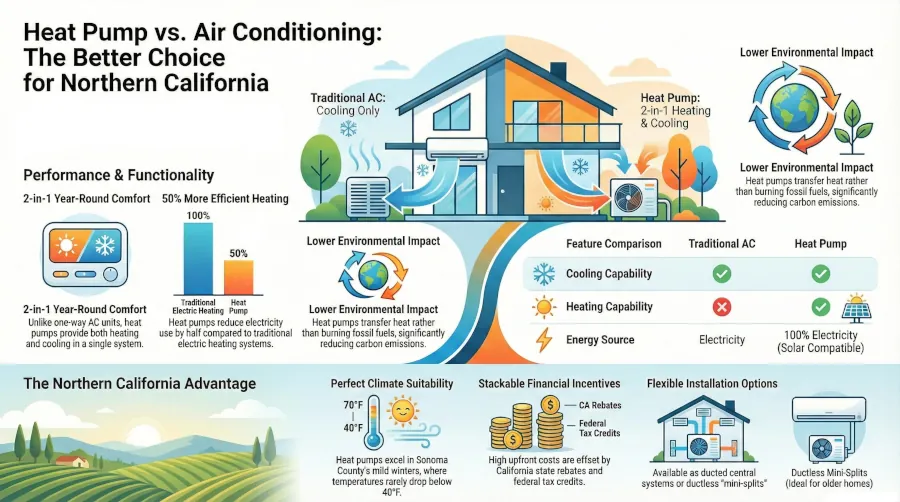
| Energy Efficiency | Heat pumps can reduce electricity use by approximately 50% compared to traditional heating systems, with similar cooling efficiency to air conditioners |
| Climate Suitability | Northern California’s mild winters (rarely below 40°F) create ideal conditions for heat pump performance |
| Year-Round Functionality | Heat pumps provide both heating and cooling, eliminating the need for separate systems |
| Cost Considerations | Higher upfront investment offset by lower operating costs and available California rebates |
| Environmental Impact | Heat pumps transfer rather than generate heat, resulting in significantly lower carbon emissions |
Understanding How Each System Works
Before diving into which system works best for Northern California, it’s helpful to understand how each one operates. A traditional air conditioner works by extracting heat from inside your home and releasing it outdoors. During summer months, refrigerant circulates through the system, absorbing indoor heat and carrying it outside where it dissipates. This one-directional process keeps your home cool but provides no heating capability when temperatures drop.
A heat pump, on the other hand, performs the same cooling function but with a remarkable added capability—it can reverse its operation. During warm weather, it operates exactly like an air conditioner, moving heat from inside to outside. When temperatures cool down, a reversing valve redirects the refrigerant flow, allowing the system to extract heat from outdoor air and bring it inside. This might sound counterintuitive—how can you extract heat from cold air?—but outdoor air contains heat energy even at temperatures as low as 20°F. The heat pump simply concentrates that energy and moves it indoors.
This reversibility gives heat pumps a significant advantage in our region. Rather than needing separate heating and cooling systems, your family benefits from a single unit that handles both responsibilities. For homeowners managing the mild seasonal shifts we experience in Sonoma County, this dual functionality often proves to be the more practical and economical choice. The technology behind heat pumps has advanced considerably in recent years, making them more efficient and reliable than ever before, especially in climates like ours where extreme temperatures are rare.
Energy Efficiency and Operating Costs in Northern California’s Climate
When comparing heat pump vs ac energy efficiency, the cooling performance is remarkably similar—both systems use comparable amounts of energy to cool your home during summer. The real difference emerges when we consider year-round operation. According to the U.S. Department of Energy, heat pumps can reduce electricity consumption for heating by approximately 50% compared to electric resistance heating like furnaces or baseboard heaters. This efficiency advantage stems from the heat pump’s ability to move heat rather than generate it through combustion or electrical resistance.
In Northern California, our mild winter climate creates ideal conditions for heat pump operation. Heat pumps perform most efficiently when outdoor temperatures remain above 40°F, and they continue to work effectively even into the low 30s with modern cold-climate technology. Since Santa Rosa and surrounding Sonoma County areas rarely experience prolonged freezing temperatures, heat pumps operate in their optimal efficiency range throughout most of the year. This climate compatibility translates directly to lower utility bills for local families.
The cost to run heat pump vs ac during cooling season remains nearly identical since both systems use the same basic refrigeration cycle. However, when you factor in the heating season, the comparison shifts dramatically in favor of heat pumps. Consider these real-world advantages for Northern California homeowners:
- Elimination of natural gas heating costs, which have shown increasing volatility in recent years, providing more predictable monthly energy expenses for your family.
- Higher Seasonal Energy Efficiency Ratio (SEER) ratings available in modern heat pumps, often ranging from 16 to 20+ SEER, meaning more cooling and heating output per dollar spent on electricity.
- Reduced peak demand on your electrical system compared to running separate heating and cooling equipment, which can help lower your overall utility rate tier.
- Consistent efficiency throughout our moderate climate swings, without the dramatic performance drops that occur in regions with harsh winters.
- Potential for even greater savings when paired with solar panels, as heat pumps run entirely on electricity rather than requiring separate fuel sources.
For families concerned about their environmental footprint, heat pumps offer an additional benefit beyond cost savings. By transferring heat rather than burning fossil fuels, they produce significantly lower carbon emissions—especially important as California continues moving toward renewable energy sources. As our electrical grid becomes cleaner through increased solar and wind power, heat pumps automatically become more environmentally friendly without any changes to your equipment. This forward-compatibility makes heat pumps a smart long-term investment as our community works toward sustainability goals.
Installation Considerations and System Options
Choosing between a heat pump and air conditioner involves more than just picking the most efficient option—it requires considering your home’s existing infrastructure and your family’s specific needs. Traditional air conditioners typically integrate with existing ductwork and furnace systems, making them a straightforward replacement option when your cooling system reaches the end of its lifespan. If you already have a functioning, relatively new furnace, installing a standard air conditioner might seem like the simpler path forward.
However, the best cooling system for Northern California often proves to be a heat pump, particularly when you’re facing replacement of both heating and cooling equipment. Ductless heat pump systems, also known as mini-splits, have gained tremendous popularity in our region because they offer flexibility that traditional ducted systems cannot match. These systems work especially well in several common scenarios:
- Older homes without existing ductwork, where installing ducts would be prohibitively expensive or architecturally challenging, allowing for effective climate control without major renovations.
- Home additions or converted spaces like garages and attics where extending existing ductwork isn’t practical or cost-effective.
- Homes with rooms that consistently run too hot or too cold, as ductless systems provide independent zone control for personalized comfort.
- Energy-conscious families seeking to avoid the 20-30% energy loss that typically occurs through ductwork leaks and poor insulation.
- Situations where custom fabrication would be necessary to accommodate new ductwork through your home’s unique architecture.
Ductless heat pump Northern California installations have become increasingly sophisticated, with modern systems offering whisper-quiet operation, smart home integration, and sleek indoor units that blend seamlessly with your home’s aesthetics. These systems consist of an outdoor compressor unit connected to one or more indoor air handlers via small refrigerant lines that require only a three-inch hole through your wall. This minimal invasiveness makes installation faster and less disruptive to your family’s daily routine compared to extensive ductwork projects.
For homes with existing ductwork in good condition, ducted heat pump systems provide another excellent option. These look and function much like traditional central air conditioning systems but with the added heating capability. Our experience with local homes has shown that proper duct sealing and insulation—often overlooked in older installations—can dramatically improve system efficiency regardless of whether you choose a heat pump or air conditioner. Before making your final decision, having a professional evaluate your home’s current ductwork condition provides valuable information about which system type will deliver the best performance for your investment.
Financial Incentives and Long-Term Value
The decision between heat pump and air conditioner becomes even more compelling when you consider the financial incentives currently available to California homeowners. Heat pump rebates California programs offer substantial savings that can significantly offset the higher upfront cost of heat pump systems. Various utility companies serving Sonoma County provide rebates ranging from several hundred to several thousand dollars for qualifying high-efficiency heat pump installations. These incentives reflect the state’s commitment to reducing energy consumption and greenhouse gas emissions.
Beyond rebates, federal tax credits for energy efficient home cooling systems can further reduce your net investment. The Inflation Reduction Act has expanded these incentives, making heat pump technology more accessible to families who previously might have considered it too expensive. When you combine state rebates, federal tax credits, and the ongoing operational savings from lower energy bills, the total cost of ownership for a heat pump often becomes competitive with—or even lower than—a traditional air conditioner paired with a separate heating system.
The long-term value proposition extends beyond immediate financial incentives. Heat pumps typically last 15-20 years with proper maintenance, providing decades of dual-season comfort. Industry best practices indicate that regular professional maintenance—including seasonal inspections, refrigerant level checks, and filter changes—maximizes this lifespan while maintaining peak efficiency. Creating a relationship with a trusted local heating and cooling service provider ensures your system receives the attention it needs to perform reliably year after year.
Climate Suitability and Performance Throughout the Year
Heat pump climate suitability represents one of the most important factors in determining whether this technology makes sense for your home. In regions with harsh winters and temperatures regularly dropping below 20°F, heat pumps historically struggled to maintain efficiency and comfort. However, here in Northern California, we enjoy exactly the type of climate where heat pumps excel. Our winter lows typically hover in the 30s and 40s—the sweet spot for heat pump performance—while our summer highs rarely reach the extreme temperatures that stress any cooling system.
Santa Rosa’s Mediterranean climate, characterized by warm, dry summers and mild, wet winters, creates ideal conditions for year-round heat pump operation. During our summer months, when temperatures climb into the 80s and 90s, heat pumps cool your home just as effectively as traditional air conditioners. When autumn arrives and evening temperatures drop, your heat pump seamlessly switches to heating mode, extracting warmth from outdoor air and keeping your family comfortable without the dry air and temperature swings sometimes associated with forced-air furnaces. This smooth transition between seasons means your family never experiences gaps in comfort.
The performance advantages in our mild climate extend to system longevity as well. Because heat pumps in Northern California rarely face the extreme operating conditions common in other regions, they experience less thermal stress and mechanical wear. Components last longer, breakdowns occur less frequently, and overall reliability improves. Our experience shows that properly maintained heat pumps in Sonoma County often exceed their expected lifespan, providing exceptional return on investment for families who choose this technology.
Energy Efficiency
Heat pumps reduce electricity use, offering similar cooling efficiencies to air conditioners.
Year-Round Comfort
Provides both heating and cooling, eliminating need for separate systems.
Cost & Incentives
Higher upfront cost, offset by rebates and long-term savings.
Making the Right Choice for Your Family
Choosing HVAC systems for mild climates like ours requires balancing immediate needs with long-term benefits. If your home currently has an efficient furnace with several years of life remaining and you’re only replacing a failed air conditioner, installing a new AC unit might make short-term financial sense. However, if you’re planning a more comprehensive upgrade or facing replacement of both heating and cooling systems, the advantages of heat pump technology in Northern California are difficult to ignore. The combination of energy efficiency, year-round functionality, available incentives, and climate compatibility creates a compelling case for heat pump adoption.
Beyond the technical and financial considerations, think about your family’s comfort preferences and lifestyle. Heat pumps provide consistent, even heating without the hot-and-cold cycles typical of furnaces. They improve indoor air quality by continuously filtering air without the combustion byproducts associated with gas heating. For families with allergies or respiratory sensitivities, this can make a meaningful difference in daily wellbeing. The quiet operation of modern heat pumps also contributes to a more peaceful home environment—an often-overlooked benefit that enhances quality of life.
Northern California’s mild climate creates the perfect environment for heat pump technology to deliver maximum efficiency, comfort, and value to your family year-round.
As you weigh your options, remember that the best decision considers not just the equipment itself but how it integrates with your home’s existing systems and your family’s specific needs. Energy efficient HVAC systems represent a significant investment in your home’s comfort infrastructure, and that investment deserves careful consideration. Whether you ultimately choose a heat pump or air conditioner, selecting properly sized equipment installed by qualified professionals ensures optimal performance and longevity.
Your Next Steps Toward Better Home Comfort
Understanding the heat pump vs air conditioner comparison empowers you to make an informed decision that serves your family’s best interests. The unique advantages of heat pump technology—particularly in Northern California’s forgiving climate—make it worth serious consideration for most homeowners. From the substantial energy savings and reduced environmental impact to the convenience of year-round comfort from a single system, heat pumps represent a forward-thinking approach to home climate control that aligns with both practical needs and long-term value.
If you’re ready to explore which system makes the most sense for your specific home and situation, we’re here to help. As your neighbors here in Santa Rosa, we understand the local climate challenges and opportunities better than anyone. Our family-owned business has been serving Sonoma County families for years, and we take pride in providing honest, expert guidance tailored to each home’s unique needs. We’d be happy to answer your questions about heat pump and air conditioner options, discuss available rebates and incentives, and help you determine the best path forward for your family’s comfort and budget.
Your home’s comfort system affects your family’s wellbeing every single day, through every season. Making the right choice now means years of reliable performance, lower energy bills, and the peace of mind that comes from knowing your loved ones will stay comfortable no matter what the weather brings. Reach out to us today—we’re always happy to share our expertise with our community and help local families find the perfect climate control solution.
FAQ SECTION (ON-PAGE)
Frequently Asked Questions
What is the main difference between a heat pump and a traditional air conditioner?
A traditional air conditioner only cools your home by moving heat from indoors to outside. A heat pump does the same cooling job in summer but can also reverse direction to provide heating in cooler months. In Northern California’s mild climate, this dual function often allows one system to handle year-round comfort instead of separate heating and cooling equipment.
Are heat pumps a good fit for Northern California’s climate?
Yes. Heat pumps work best in regions with mild winters, and Northern California fits that profile well. Local winter temperatures usually stay above freezing, which allows heat pumps to operate efficiently most of the year. They cool homes effectively during warm summers and provide steady heating during cooler months without the extreme conditions that challenge them in colder climates.
How do I know if I should replace my AC with a heat pump?
If you’re replacing both your heating and cooling systems, a heat pump is often worth considering. If your furnace is newer and in good condition and only the AC has failed, replacing just the air conditioner may make sense short term. A professional evaluation of your home, ductwork, and comfort needs can help clarify the best option.
Can a heat pump really heat my home during winter?
In this region, yes. Heat pumps can extract usable heat from outdoor air even when temperatures drop into the 30s. Since winters in Santa Rosa and Sonoma County are generally mild, heat pumps typically provide reliable and consistent heating throughout the season without needing a separate furnace.
What types of heat pump systems are available for homes?
Homeowners can choose between ducted heat pump systems and ductless mini-split systems. Ducted systems use existing ductwork and function like central heating and air conditioning. Ductless systems work well for homes without ducts, additions, or rooms with uneven temperatures, and they offer flexible zoning with minimal installation disruption.
Do heat pumps cost more to install than air conditioners?
Heat pumps usually have a higher upfront cost than a standard air conditioner, especially if they are replacing both heating and cooling equipment. However, that initial investment may be offset over time by lower operating costs, available California rebates, and federal tax credits. Long-term value often depends on your current system and energy usage.
How energy efficient are heat pumps compared to air conditioners?
When cooling, heat pumps and air conditioners use similar amounts of energy. The efficiency advantage of a heat pump shows up during the heating season. Because heat pumps move heat instead of generating it, they can use significantly less electricity for heating compared to traditional electric resistance systems, which can help lower overall energy bills.
What kind of maintenance do heat pumps and AC systems need?
Both systems benefit from regular professional maintenance. This typically includes seasonal inspections, checking refrigerant levels, cleaning components, and replacing filters as needed. Routine maintenance helps maintain efficiency, reduce unexpected breakdowns, and extend the system’s lifespan, which is often 15 to 20 years with proper care.
Do you provide heat pump and AC services in Santa Rosa and Sonoma County?
Yes. The article references service throughout Santa Rosa and the surrounding Sonoma County area. Local experience matters because system recommendations should reflect regional climate conditions, typical home designs, and local energy considerations. Working with a nearby HVAC provider helps ensure your system is well-suited to the area.