
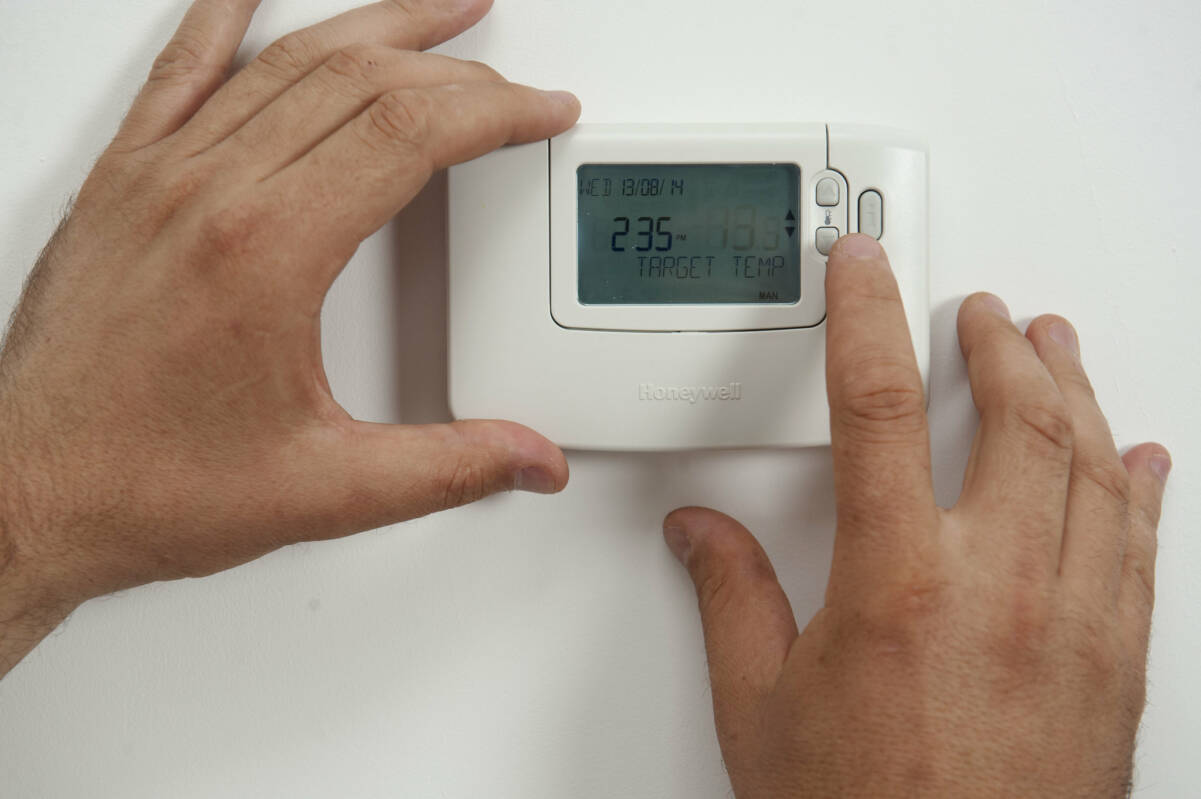
If you have ever stared at your thermostat wondering whether to flip that fan switch to “Auto” or “On,” you are not alone, and the answer matters more than you might think. Heating and cooling account for close to half of a typical home’s total energy bill, which means the question of should your thermostat fan be on Auto or On can directly affect what you pay every month.
At Dale Heating Cooling & Sheetmetal, we get asked this question constantly by homeowners across Sonoma County. Below, we break down exactly how each setting works, what it costs you, and how it affects the air you breathe.
Key Takeaways
- Auto setting: The fan only runs when your system is actively heating or cooling, which typically saves energy and money.
- On setting: The fan runs continuously, which can improve air circulation and filtration but usually increases electricity use.
- Energy efficiency: Because heating and cooling represent such a large share of home energy costs, the fan setting you choose has a real financial impact.
- Air quality: Continuous fan operation filters air more consistently, but it can also pull moisture back into your home from wet evaporator coils.
- Motor type matters: Homes with modern HVAC equipment using ECM blower motors handle the “On” setting far more efficiently than older systems.
- Best use cases: “Auto” works best for most everyday situations, while “On” makes more sense during allergy season or in homes with uneven temperature distribution.
- The bottom line: There is no single right answer, it depends on your home, your equipment, and your priorities around comfort versus cost.
What’s the Difference Between Auto and On Thermostat Fan Settings?
Every thermostat with a fan switch gives you two basic options. Understanding the mechanics behind each one is the first step to answering should your thermostat fan be on Auto or On for your specific household.
When set to Auto, the blower fan only turns on when your heating or cooling system is actively running a cycle. Once the thermostat reaches your set temperature and the system shuts off, the fan shuts off too.
When set to On, the fan runs continuously, 24 hours a day, regardless of whether the heating or cooling system is actively cycling. Air still moves through your ducts and vents even when the compressor or furnace burner is idle.
We cover this distinction in more detail on our page about the differences between “On” and “Auto” thermostat settings – just click the image below.
The Pros and Cons of the Auto Setting
The Auto setting is the default on most systems, and for good reason. It is the simplest way to balance comfort and cost without much thought.
Advantages of Auto
- Lower electricity usage since the fan only runs during active heating or cooling cycles
- Less wear and tear on the blower motor over time
- Reduced risk of humidity being redistributed through your ductwork
- Quieter operation overall since the fan isn’t constantly running
Disadvantages of Auto
- Air only circulates and filters when the system cycles, so dust and allergens linger longer between cycles
- Temperature can feel less even across rooms far from the thermostat
- Some homeowners notice more noticeable temperature swings before the next cycle kicks in
The Pros and Cons of the On Setting
Switching your fan to On sounds appealing if you want constant airflow, but it comes with real tradeoffs worth understanding before you make the change.
Advantages of On
- Continuous air filtration, since air keeps passing through your filter even between heating and cooling cycles
- More even temperatures throughout the house, especially helpful in multi-story homes
- Fewer drafts or cold/hot spots near vents
Disadvantages of On
- Higher electricity consumption since the blower motor runs nonstop
- Increased wear on the fan motor, which can shorten its lifespan
- Possible humidity issues, since a running fan can blow moisture off wet cooling coils back into your living space
- Louder background noise from constant fan operation
Should Your Thermostat Fan Be on Auto or On for Energy Efficiency?
This is usually the deciding factor for most homeowners, and it’s where the numbers speak clearly. A blower motor that runs all day, every day, uses noticeably more electricity than one that only kicks on during active cycles.
Rising utility costs make this an even bigger consideration heading into 2026. If your area has seen electricity rate increases, the gap between Auto and On becomes more expensive to ignore.
That said, not every home is affected equally. Homes with modern ECM (electronically commutated motor) blowers are far more efficient at handling continuous operation compared to older PSC (permanently split capacitor) motors.
If your heating system or cooling system uses an older blower motor, switching to “On” full time could add a meaningful amount to your monthly bill. Upgrading equipment is one option, but for most households, simply using the Auto setting remains the more budget-friendly choice.
Leaving your thermostat fan running continuously can significantly increase your energy bills.
Should Your Thermostat Fan Be on Auto or On for Better Air Quality?
Energy costs aren’t the only factor in this decision. Indoor air quality plays a major role too, and it’s an area where the “On” setting has a genuine advantage.
When your fan runs continuously, air keeps passing through your filter around the clock. This means dust, pet dander, and other airborne particles get captured more consistently rather than only during active heating or cooling cycles.
This can be especially helpful for allergy sufferers or households with pets, where continuous filtration noticeably reduces airborne irritants between cycles. If air quality is your top priority, browsing our air quality resources can help you decide whether the “On” setting fits your household’s needs.
However, there’s a tradeoff worth understanding, especially during cooling season. When your air conditioner shuts off, moisture remains on the evaporator coil.
If you live somewhere humid, that extra moisture can make your home feel muggier and can even contribute to musty odors over time. For homes prone to humidity swings, Auto tends to be the safer choice for maintaining healthy indoor air.
When Should You Use the Auto Setting?
For most homeowners, Auto is the practical, everyday choice. It’s the setting we recommend by default for the majority of households we work with.
Consider using Auto if:
- You want to keep energy bills as low as possible
- Your home doesn’t have major humidity concerns
- You have an older blower motor that isn’t designed for continuous operation
- You’re comfortable with slightly less consistent airflow between rooms
This is also the better option if you’re running a furnace or heating system during colder months, since continuous fan operation in winter can make rooms feel drafty even when the air itself is warm.
When Should You Use the On Setting?
There are specific situations where switching to “On” makes real sense, even with the added energy cost. Knowing when to make the switch helps you get the benefits without unnecessary waste.
Consider using On if:
- Someone in your household has allergies or asthma and benefits from constant filtration
- You have a multi-story home with noticeable temperature differences between floors
- Your system uses a modern ECM blower motor built for efficient continuous operation
- You’re using a heat pump system that benefits from more consistent air distribution
Many homeowners find that switching to “On” temporarily during high pollen days or wildfire smoke events, then returning to Auto afterward, offers the best of both worlds.
If you’re weighing this decision alongside a system upgrade, it’s also worth exploring mini-split and ductless HVAC options, since some of these systems handle continuous fan operation differently than traditional forced air setups.
Auto vs. On: Quick Comparison
Here’s a side-by-side look to help you decide once and for all whether your thermostat fan should be on Auto or On.
| Factor | Auto | On |
|---|---|---|
| Energy Cost | Lower | Higher |
| Air Filtration | Periodic | Continuous |
| Temperature Evenness | Moderate | Better |
| Humidity Control | Better | Riskier |
| Motor Wear | Less | More |
| Best For | Everyday use, budget-conscious homes | Allergy sufferers, uneven homes |
How Your HVAC Equipment Affects This Decision
Not every home is starting from the same equipment baseline, and that matters when deciding whether your thermostat fan should be on Auto or On. Older systems and newer systems handle continuous fan operation very differently.
Systems built with ECM blower motors are designed with efficiency in mind, meaning continuous operation costs less than it would with an older PSC motor. If you’re unsure what kind of blower motor your system uses, a quick check from a licensed HVAC technician can clarify whether “On” is a realistic option for your household.
For homes running an older air conditioning system, we generally recommend sticking with Auto unless you have a specific air quality reason to switch, since the added electricity cost on an inefficient motor can add up quickly over a full cooling season.
Tips for Deciding What Works Best in Your Home
There’s no universal right answer here, but a few practical steps can help you land on the setting that fits your household.
- Check your blower motor type. ECM motors handle continuous operation more efficiently than older PSC motors.
- Consider your household’s health needs. If allergies or respiratory issues are a concern, continuous filtration may be worth the added cost.
- Watch your humidity levels. If your home tends to feel muggy, Auto is usually the safer choice.
- Try it seasonally. Some homeowners switch to “On” only during wildfire smoke season or high pollen days.
- Track your energy bill. Compare a month on Auto versus a month on On to see the real difference for your specific home.
Final Thoughts
So, should your thermostat fan be on Auto or On? For most homeowners, Auto remains the more practical, cost-effective choice for everyday use.
That said, the “On” setting has real benefits for households prioritizing continuous air filtration or dealing with uneven temperatures between rooms. The right answer ultimately depends on your equipment, your budget, and your household’s specific comfort and health needs.
If you’re still unsure which setting makes sense for your home, our team is happy to walk you through your system’s specifications and help you make the most efficient, comfortable choice for your household in 2026 and beyond.
Frequently Asked Questions
Is it bad to leave your thermostat fan on “On” all the time?
It isn’t necessarily bad, but it does use more electricity and can increase wear on your blower motor over time. Whether it’s worth it depends on your motor type, your budget, and whether you value continuous air filtration enough to offset the extra cost.
Does the Auto setting save money compared to On?
Yes, in most cases the Auto setting saves money because the fan only runs during active heating or cooling cycles rather than continuously. Since heating and cooling already represent a large share of a home’s energy bill, choosing Auto over On is one of the simplest ways to reduce that cost.
Does running the fan continuously improve air quality?
Continuous fan operation does improve air filtration since air passes through your filter more often throughout the day. However, it can also increase indoor humidity in some climates, so the air quality benefit comes with a tradeoff worth considering.
Should your thermostat fan be on Auto or On during allergy season?
Many homeowners find that switching to “On” during allergy season helps reduce airborne allergens through more consistent filtration. Just remember to switch back to Auto once pollen counts drop to avoid unnecessary energy costs.
Will leaving my thermostat fan on On increase humidity in my home?
It can, especially during cooling season when moisture on the evaporator coil gets blown back into your living space. If your home already struggles with humidity, the Auto setting is generally the safer choice.
Is it worth upgrading my blower motor to run the fan on On more often in 2026?
If you’re already planning an HVAC upgrade, choosing a system with an ECM blower motor makes continuous fan operation far more energy efficient. For homes not currently upgrading equipment, sticking with Auto is usually the more cost-effective path.
What thermostat fan setting do HVAC professionals recommend?
Most HVAC professionals recommend Auto as the default setting for typical households due to its energy savings and reduced motor wear. That said, professionals often suggest On for specific situations like allergy management or homes with significant temperature imbalances between rooms.