Updated July 5, 2026
Under the U.S. Department of Energy’s new SEER2 efficiency mandates, non-compliant systems are projected to see a 30% jump in production costs, which is pushing homeowners toward the newer, smarter types of air conditioners now available. That shift matters a great deal here in Sonoma County, where our climate micro-regions range from foggy coastal mornings to triple-digit inland afternoons.
As your neighbors in Sonoma County, we at Dale Heating, Cooling & Sheetmetal want you to understand exactly what your options are before you make a decision that affects your family’s comfort for the next decade or more.
Key Takeaways
- Central air conditioning remains the standard for whole-home comfort but requires ductwork in good condition to run efficiently.
- Ductless mini-splits are ideal for additions, older homes without ducts, or room-by-room zoning. Learn more in our mini-split HVAC resources.
- Heat pumps offer a dual-fuel hybrid approach, heating and cooling from a single system. See our heat pump guides for local performance data.
- Window and portable units still have a place, but they are not a long-term solution for whole-home efficiency.
- Geothermal cooling is the most eco-friendly, longest-lasting option, often built to serve a home for generations.
- Inverter technology now dominates new equipment because it runs at variable speeds instead of simply switching on and off, saving energy and reducing wear.
- Old, single-stage window units and R-22 based systems should be phased out; they are inefficient, hard to service, and often use refrigerants that are being retired.
What Types of Air Conditioners Are Available to Sonoma County Homeowners in 2026?
Choosing among the many types of air conditioners on the market can feel overwhelming. That is exactly why our anti-cookie-cutter philosophy exists: your cooling solution should be designed around your home, not pulled off a shelf.
Below, we walk through the major categories, along with the pros, cons, and what’s genuinely new versus what’s outdated.
Central Air Conditioning Systems: The Traditional Whole-Home Choice
Central air remains the most common of all the types of air conditioners installed in Sonoma County homes. A single outdoor condenser works with an indoor coil and your existing ductwork to cool every room at once.
Pros:
- Consistent, whole-home comfort with a single thermostat
- Higher resale value appeal for buyers expecting central air
- Pairs well with whole-home air filtration and humidity control
Cons:
- Requires ductwork, which can leak or be poorly sized in older homes
- Higher upfront installation cost
- Uneven cooling if the ducts were not custom fabricated for your specific layout
This is where our in-house custom fabrication shop makes a real difference. Ductwork that is precisely built for your home’s layout, rather than generic sheet metal cut to a standard size, keeps air moving efficiently and keeps your indoor air quality (IAQ) healthier. You can learn more about our cooling services or request a custom build through our fabrication order page.
Ductless Mini-Split Systems: Best for Zoned Comfort
Ductless mini-splits have become one of the fastest-growing types of air conditioners for both retrofits and additions. They mount directly on a wall or ceiling and connect to an outdoor compressor through a small conduit, no ductwork required.
Pros:
- No ductwork needed, which is ideal for older homes or converted spaces
- Room-by-room zoning means you only cool the spaces you’re using
- Quiet operation and flexible mounting locations
Cons:
- Indoor wall units are visible and some homeowners prefer a hidden system
- Multi-zone setups can carry a higher upfront cost than a single central unit
- Requires periodic filter cleaning per zone to keep efficiency up
Whether you need a single-zone unit for a bonus room or a multi-zone system for an entire second story, our ductless HVAC guides break down sizing and placement considerations specific to Sonoma County homes.
Heat Pumps: A Dual-Fuel Hybrid Approach to Cooling
Heat pumps deserve their own conversation among the types of air conditioners available today because they do more than cool. They also heat your home by reversing the refrigeration cycle, pulling warmth from outside air even on cold days.
Pros:
- One system handles both heating and cooling
- High-efficiency operation, especially in our mild coastal climate
- Pairs well with a dual-fuel hybrid setup alongside a gas furnace for extreme cold snaps
Cons:
- Average lifespan tends to run shorter than a standard AC system, closer to 10 years, which matters for long-term budget planning
- Performance can dip in prolonged freezing temperatures without a backup heat source
- Not every existing ductwork setup is compatible without modification
Contrary to popular belief, California is not synonymous with year-round sunshine and warm weather. Sonoma County sees real winter chill, which is exactly why we walk homeowners through our heat pump versus air conditioner comparison before recommending either option.
Window and Portable Units: Still Worth Considering in 2026?
Window and portable units remain among the simplest types of air conditioners, and they still make sense for renters, small apartments, or single problem rooms. They plug into a standard outlet and require no professional installation.
Pros:
- Low upfront cost and no installation labor
- Easy to remove seasonally
- Good for supplementing a single hot room
Cons:
- Not efficient for cooling more than one room
- Louder operation compared to modern inverter-driven systems
- Older models often lack the SEER2 efficiency standards now expected of newer equipment
We cover a few of these alternate configurations in more depth in our piece on alternate types of AC units, including where they genuinely make sense and where they fall short.
Side-Discharge AC Units: A Space-Conscious Solution
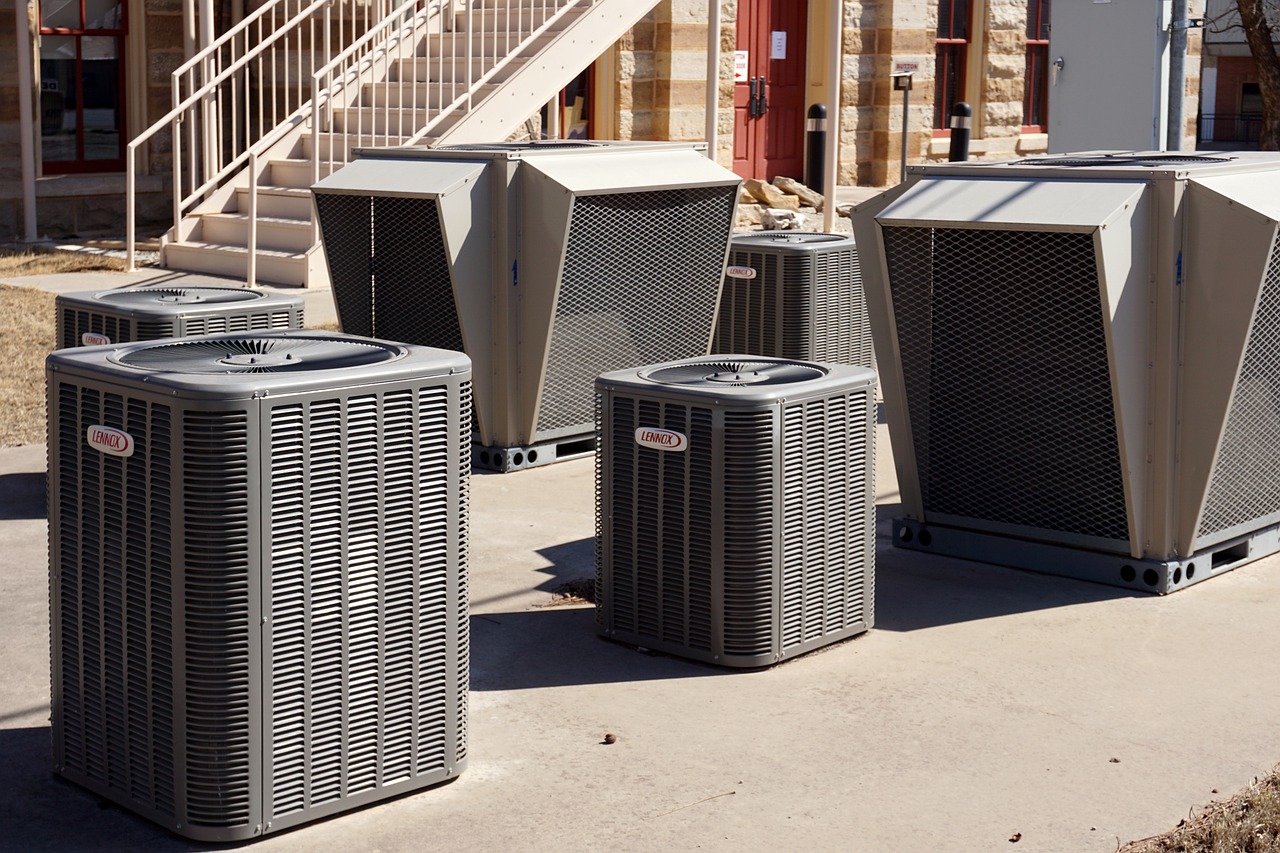
Side-discharge units are a newer configuration worth knowing about among the types of air conditioners suited to tight lots. Instead of blowing air upward, these units release air horizontally, which allows for closer placement to fences, walkways, or narrow side yards.
Pros:
- Compact footprint ideal for smaller properties
- Flexible placement options where a standard top-discharge unit wouldn’t fit
- Comparable efficiency to standard central AC condensers
Cons:
- Fewer manufacturers currently produce this configuration
- Airflow clearance requirements still apply and must be checked carefully
We go into more detail on placement requirements in our article on side-discharge AC units, which has become a popular option for our clients with narrow side-yard installations.
Geothermal Cooling: The Eco-Friendly Option Built for Generations
Geothermal systems use the stable underground temperature to cool your home instead of relying on outdoor air temperature swings. It is one of the most efficient types of air conditioners available, though it comes with a higher upfront investment.
Pros:
- Extremely high-efficiency operation, often cutting energy use dramatically compared to standard systems
- Underground loops are built to last for generations, not just years
- Minimal outdoor equipment footprint
Cons:
- Higher installation cost due to the underground loop system
- Not every lot size or soil condition supports installation
We consider geothermal one of the strongest green options available today, and we detail why in our guide to green HVAC upgrades for Northern California homes.
Emerging AC Technology to Watch in 2026
The pace of change among the types of air conditioners has accelerated, and a few technologies deserve your attention this year.
Inverter compressors are quickly becoming the standard rather than the exception. Instead of cycling fully on and off, inverter-driven units adjust their speed continuously, which reduces energy waste and wear on the system. Coherent Market Insights projects inverter technology will represent 69.1% of the market in 2026, and for good reason: it means lower running costs and steadier indoor temperatures.
VRF (Variable Refrigerant Flow) technology, long used in commercial buildings, is increasingly finding its way into larger residential properties and multi-unit homes. It allows a single outdoor unit to serve multiple indoor zones at different temperatures simultaneously. We explore this shift in our piece on HVAC systems and sizing, which touches on how VRF is reshaping expectations for both homes and businesses.
Smart, AI-driven climate control is another development worth watching. These systems learn your household patterns and adjust automatically rather than requiring constant manual input.
We believe that monitoring your indoor air is not about fear; it is about having the data you need to make informed decisions, which is why we pair smart cooling technology with genuine indoor air quality monitoring rather than treating it as an afterthought.
Old AC Technology You Should Not Consider in 2026
Not every option among the older types of air conditioners is worth holding onto simply because it still runs. A few categories deserve a hard look before you decide to repair rather than replace.
R-22 (Freon) based systems: This refrigerant has been phased out for years now, and finding a technician to service it, let alone finding the refrigerant itself, is becoming difficult and expensive.
Single-stage, non-inverter compressors: These older units only run at full blast or fully off, which wastes energy and creates temperature swings compared to today’s inverter-driven models.
Undersized or oversized legacy systems: Many older homes have equipment that was never properly matched to the home’s square footage, which is a sizing issue we cover in depth in our HVAC services overview.
A fully functional and efficiently operating heating system could be just a click or a phone call away, and the same is true for your cooling system.
Older units waste energy and break down more often. Knowing the average lifespan helps you decide when to upgrade to emerging high-efficiency tech.
Choosing the Right Type of Air Conditioner for Your Sonoma County Home
Because we’re a family-owned company, we understand how important your family’s comfort is to you, and we know that no two homes are alike. A home near the coast dealing with fog and humidity has very different needs than an inland property facing summer heat and wildfire smoke infiltration.
Our anti-cookie-cutter philosophy means your solution is designed around your building, your climate micro-region, and your household’s specific comfort needs, not a generic recommendation pulled from a catalog.
If you’re also weighing heating options alongside your cooling decision, our overview of the five types of heating systems pairs well with this guide, especially if you’re considering a dual-fuel hybrid setup.
We invite you to reach out through our contact page for expert guidance, or read more about our roots as a family-owned and operated business serving both homes and businesses throughout the region.
Conclusion
Understanding the different types of air conditioners available in 2026 puts you in a much stronger position to make a decision that fits your home, your budget, and your comfort expectations. From central air and ductless mini-splits to heat pumps, geothermal loops, and emerging VRF and inverter technology, the options today are far more efficient than what was on the market even a few years ago.
What matters most is avoiding outdated technology, like R-22 based or single-stage systems, and instead choosing among the types of air conditioners that match your specific climate micro-region and household needs. Dale gets the reliability you deserve in your HVAC system, as well as the all-around professional service you expect, and we’re glad to walk you through every option available.
Frequently Asked Questions
What are the main types of air conditioners for homes in 2026?
The main types of air conditioners include central air systems, ductless mini-splits, heat pumps, window and portable units, side-discharge units, and geothermal cooling systems. Each serves a different home layout, budget, and efficiency goal.
Which type of air conditioner is most energy efficient?
Inverter-driven systems and geothermal cooling tend to offer the highest efficiency among current types of air conditioners. Homeowners who upgrade to energy-efficient HVAC systems can see energy consumption drop by 20% to 50% compared to older equipment.
Are ductless mini-splits worth it in 2026?
Yes, ductless mini-splits are worth considering for homes without existing ductwork or for room-by-room zoning needs. They now represent close to half of the global residential AC market because of their flexibility during retrofits.
Is a heat pump better than a traditional air conditioner?
A heat pump offers both heating and cooling from a single dual-fuel hybrid system, which traditional air conditioners cannot do on their own. However, heat pumps typically have a shorter average lifespan of around 10 years, so long-term budget planning matters.
What old AC technology should I avoid replacing my system with in 2026?
Avoid R-22 (Freon) based systems and older single-stage, non-inverter compressors when replacing an aging unit. Both are inefficient, harder to service, and out of step with current SEER2 efficiency expectations.
How do I know which type of air conditioner is right for my home?
The right choice among the types of air conditioners depends on your home’s ductwork, square footage, climate micro-region, and budget. A professional load calculation and in-person assessment is the most reliable way to match the correct system to your specific home.
What is VRF technology and is it available for homes?
VRF (Variable Refrigerant Flow) technology allows one outdoor unit to serve multiple indoor zones at different temperatures at once. While it originated in commercial HVAC, it is increasingly available for larger residential properties and multi-zone homes in 2026.